Prior Authorization

Before care begins, the paperwork must clear.
We secure approvals swiftly, so your patients aren’t left waiting, and your revenue isn’t left behind.

Prior Authorization


Prior Authorization

We handle the full scheduling process, from booking new appointments to rescheduling, reminders, and cancellations. Our team ensures patients are scheduled accurately, on time, and in sync with provider availability. Our service includes.

  • Insurance Eligibility Verification
  • Clinical Documentation Support
  • Payer-Specific Authorization Submission
  • Real-Time Status Tracking
  • Follow-Up & Escalation Handling


Why Prior Authorization Matters for Your Practice

Prior authorization plays a critical role in ensuring services are approved and paid by insurance companies. When not handled correctly, it can lead to delayed treatments, denied claims, and lost revenue. That’s where CureIntent comes in, handling prior authorizations end to end so your team can focus on patient care.

How Our Prior Authorization Works

Case Intake & Review

We gather required patient and insurance details.

Payer Check

We verify payer authorization requirements.

Request Submission

We submit complete authorization requests.

Follow-Up

We follow up to avoid delays.


LEt’s connect

Ready to Work?

Prior authorizations don’t have to slow you down. CureIntent handles the entire process from intake to approvals. so your team can focus on care, not paperwork.
Avoid delays, reduce denials, and protect your revenue with our end-to-end solution.

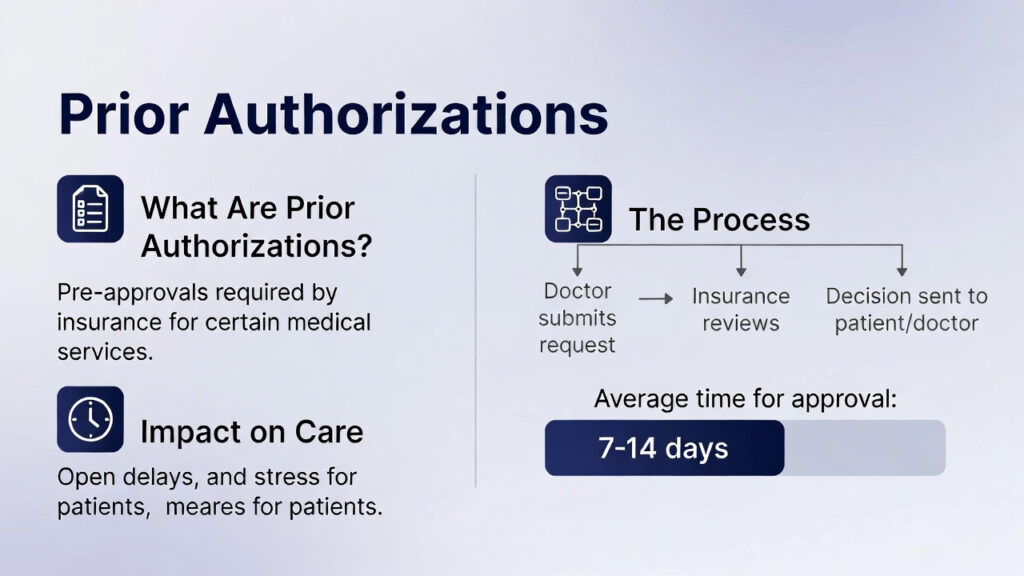
Prior authorization is the approval required from an insurance company before certain medical services, procedures, or medications are covered.

Insurance companies use prior authorization to confirm medical necessity and control healthcare costs before approving payment.

If prior authorization is missing, claims may be denied, delayed, or rejected—leading to lost revenue and patient frustration.

In most cases, the provider’s office is responsible for submitting and tracking prior authorization requests.

Approval timelines vary by payer and service, ranging from a few days to several weeks if not followed up properly. Consistent monitoring and proactive communication are essential to prevent unnecessary delays. Missing documentation or incomplete clinical details often extend the process further. Our team ensures every request is submitted with accurate information and tracked until resolution. By reducing back‑and‑forth with payers, we help providers secure faster approvals. This streamlined approach improves patient access to care while protecting revenue cycles.

Yes, many practices outsource prior authorization to reduce staff workload, speed up approvals, and avoid costly errors.

Typically, clinical notes, diagnosis codes, procedure codes, treatment plans, and medical necessity documentation are required. In addition, payers may request supporting lab results, imaging reports, or prior treatment history to validate the necessity of the requested service. Accurate demographic details, insurance information, and provider credentials must also be included to ensure smooth processing. Missing or incomplete documentation often leads to delays, denials, or repeated requests for clarification, which can frustrate both patients and providers. By maintaining thorough the records and submitting all required elements upfront, practices can significantly reduce administrative burden, accelerate approvals, and safeguard revenue streams.

Prior authorization improves approval chances but does not guarantee payment—accurate coding and billing are still required.

Delays in prior authorization can postpone treatments, which is why proactive handling is critical.

Specialties like cardiology, orthopedics, radiology, oncology, dermatology, and pain management frequently require prior authorization.