
Revenue Cycle Management

CureIntent provides complete Revenue Cycle Management (RCM) services for
US healthcare practices. From patient registration to final reimbursement,
maximize revenue and reduce claim denials.
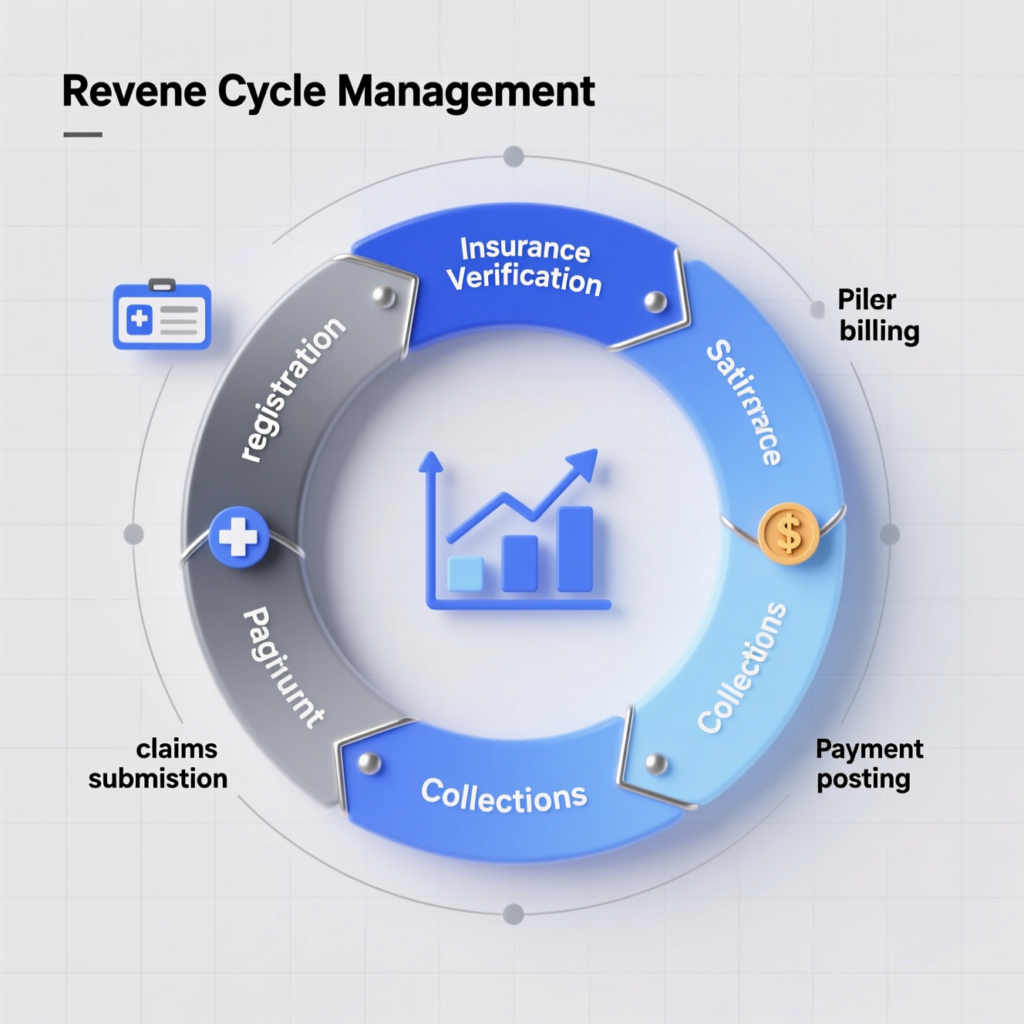
Revenue Cycle Management


Revenue Cycle Management

CureIntent streamlines your entire revenue cycle, helping healthcare practices get paid faster, reduce claim denials, and stay compliant. Our expert team handles everything from registration to collections so you can focus on patient care.

  • Accurate Charge Capture
  • Coding Audits & Compliance
  • Claims Submission & Tracking
  • Denial Management & Appeals
  • Collections & AR Recovery
  • Financial Analytics & Reporting


Why CureIntent RCM Is the Best Choice?

Hundreds of US medical practices trust CureIntent for fast, accurate, and stress-free Revenue Cycle Management (RCM). Proper RCM improves cash flow, reduces claim denials, and ensures timely payments (Wikipedia – Revenue Cycle Management).

How Our RCM Process Works

Patient Registration & Verification

Clean demographics and insurance checks

Coding & Charge
Entry

Correct CPT/ICD-10 coding for error-free claims

Claims Submission & Tracking

Real-time monitoring for faster reimbursements

Denial Management & Collections

Quick resolution of rejected claims and follow-ups

Our Key Features

Expert billing support, seamless EHR/PMS integration, and cost‑effective RCM services to maximize collections.

Skilled billing specialists who understand healthcare inside out.

Streamlined processes to get your claims paid quickly.

High accuracy to reduce denials and rework.

Services tailored for practices of any size or specialty.

Clear insights into every claim and payment for easy tracking.

Ready to Work

Streamline your revenue cycle with expert RCM services from CureIntent.

Let us handle the paperwork so your staff can focus on patients.

Maximize cash inflow with efficient claims management.

Reduce denials and unexpected claim issues.

No one-size-fits-all; we adapt to your practice needs.

Know exactly where every claim stands in real time.

Expand your billing support as your practice grows, no disruptions.

FAQS

Revenue Cycle Management (RCM) is the process healthcare providers use to manage patient revenue from appointment scheduling to final payment. It includes insurance verification, coding, claims submission, payment posting, and denial management to ensure providers get paid accurately and on time.

Revenue Cycle Management services help medical practices handle billing, coding, insurance claims, follow-ups, and collections. These services reduce claim denials, improve cash flow, and allow providers to focus more on patient care instead of administrative work.

In medical billing, RCM covers the entire financial lifecycle of a patient visit. This includes charge entry, medical coding, claim submission, insurance follow-ups, payment posting, and appeals to maximize reimbursement and reduce revenue loss.

In healthcare, RCM (Revenue Cycle Management) ensures that providers are properly reimbursed for the services they deliver. It connects clinical operations with financial processes to maintain the financial health of hospitals, clinics, and private practices.

The main steps in Revenue Cycle Management include:
Patient registration and insurance verification
Medical coding and charge capture
Claims submission
Payment posting
Denial management and appeals
Patient billing and collections
Each step plays a critical role in reducing delays and increasing revenue.

RCM solutions include software and outsourced services designed to automate billing workflows, reduce errors, and improve collections. These solutions often integrate with EHR systems and provide real-time reporting and compliance support.

Common RCM jobs include medical billers, coders, denial analysts, AR specialists, compliance officers, and RCM managers. These roles focus on billing accuracy, insurance follow-ups, and improving overall revenue performance.

RCM improves revenue by reducing claim denials, speeding up payments, ensuring accurate coding, and improving follow-up on unpaid claims. Effective RCM helps practices collect more revenue with less administrative effort.

Yes, outsourcing RCM is often worth it for practices that struggle with denied claims, staff burnout, or delayed payments. Outsourced RCM services bring expertise, reduce overhead costs, and help practices achieve faster and more consistent cash flow.