
Revenue Cycle Management Services
In this article, we’ll explore Revenue Cycle Management services (RCM), what they are, how they work, and why healthcare providers across the USA trust them to boost revenue, reduce billing errors, and streamline operations. By the end, you’ll know:
- What RCM is and why it’s essential
- How to choose the best RCM service for your practice
- Tips to save costs and reclaim your time
- Key benefits of outsourcing RCM vs managing in-house
Let’s get started!
What Are Revenue Cycle Management Services?
Revenue Cycle Management (RCM) is the complete process healthcare providers use to track and manage payments, from scheduling appointments to collecting the final payment. It combines:
- Patient registration & insurance verification
- Medical coding & claims submission
- Payment posting & reconciliation
- Denial management & appeals
- Patient billing & collections
Example: A dental clinic in Texas improved its cash flow by 35% after switching to professional RCM services, simply by streamlining insurance verification and claims submission.
Why Healthcare Revenue Cycle Management Is Critical
Healthcare RCM is complex because it involves:
- Working with multiple insurance companies and ever-changing rules
- Handling patient billing and out-of-pocket payments
- Preventing claim denials and fixing rejected claims
- Integrating data from multiple systems
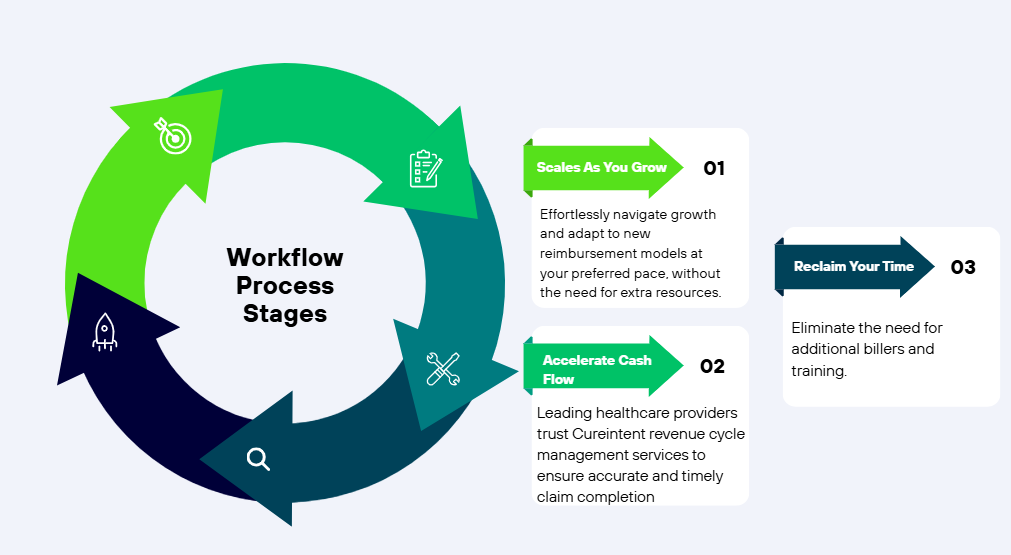
The benefits of strong RCM services include:
- Maximized Revenue: Collect every dollar owed
- Reduced Claim Denials: Fewer errors mean faster payments
- Improved Cash Flow: Payments come in on time
- HIPAA Compliance: Protect patient data and stay secure
- Better Patient Experience: Clear bills and simple payments
How Revenue Cycle Management Services Work: Step-by-Step
Here’s a simple breakdown of the RCM process:
| Step | What Happens | Why It Matters |
|---|---|---|
| Patient Registration | Collect demographics & verify insurance | Reduces rejected claims |
| Medical Coding | Convert diagnoses & procedures to ICD-10/CPT codes | Ensures accurate claims |
| Claims Submission | Submit claims to insurance | Faster reimbursements |
| Payment Posting | Record payments & identify discrepancies | Avoids lost revenue |
| Denial Management | Correct & resubmit denied claims | Recover previously lost revenue |
| Patient Billing | Send statements & collect balances | Improves patient satisfaction |
Pro Tip: Using automated tools with AI support can reduce manual errors and speed up this process by 20–30%.
Choosing the Best Revenue Cycle Management Services
With so many providers, it can feel overwhelming. Here’s a friendly guide:
Key Factors to Consider
- Professional Quality: Look for providers with top-tier hiring standards. Acceptance rates of 2–5% usually indicate rigorous selection.
- Training Programs: Providers should offer ongoing training in coding, claims, and customer service.
- Communication Systems: Ensure there are clear protocols for updates, questions, and urgent issues.
- Pricing Transparency: Avoid hidden fees. Clear hourly or monthly packages are ideal.
- Support & Backup: An account manager or backup system ensures you’re never left stranded.
Top Revenue Cycle Management Providers (Example Comparison)
| Provider Type | Pricing | Best For | Rating |
|---|---|---|---|
| Premium Provider | $25-40/hr | Quality-focused businesses | ⭐⭐⭐⭐⭐ |
| Value Provider | $12-20/hr | Budget-conscious small businesses | ⭐⭐⭐⭐ |
| Enterprise Provider | Custom | Large organizations, 100+ hrs/month | ⭐⭐⭐⭐⭐ |
| Specialist Provider | $22-35/hr | Healthcare-specific needs | ⭐⭐⭐⭐ |
Tip: Choose a provider that matches your practice size, industry, and workflow needs.
Outsourced RCM vs In-House Billing
| Factor | Outsourced RCM | In-House Billing |
|---|---|---|
| Cost | 50–70% less | High (salary, benefits, office space) |
| Expertise | Specialized, trained staff | Limited to in-house knowledge |
| Scalability | Easily adjust hours | Hiring/firing required |
| Coverage | 24/7 (optional) | Limited to office hours |
| Compliance | HIPAA & industry regulations | May require additional training |
Example: A healthcare clinic in New York saved $52,000 annually by switching to an outsourced RCM while improving patient satisfaction scores.
How to Get Started
- Identify Tasks: List admin, scheduling, or billing tasks you want to delegate.
- Set Budget: Determine how much you can spend monthly.
- Request Consultations: Talk to 2–3 providers and check references.
- Start with a Trial: Test quality and communication before committing long-term.
- Measure ROI: Track time saved, error reduction, and revenue improvement.
Conclusion: Maximize Revenue with Cureintent
Investing in professional Revenue Cycle Management services with Cureintent can transform your healthcare practice. From billing, insurance claims management, denial reduction, and patient collections, to HIPAA compliance and automated workflows, the right RCM partner ensures your practice runs efficiently, saves money, and focuses on what matters most, patient care.
Learn more about healthcare RCM from the American Medical Association.