
Best Data Entry Automations for Medical Billing
We are going to break down the Best Data Entry Automations for Medical Billing, which tools are the best for your specific needs, and how clinics across the USA, especially here in California are using these tools to get paid faster.
Trust us, We will keep it simple, human, and practical, just results.
What is the Best Data Entry Automations for Medical Billing?
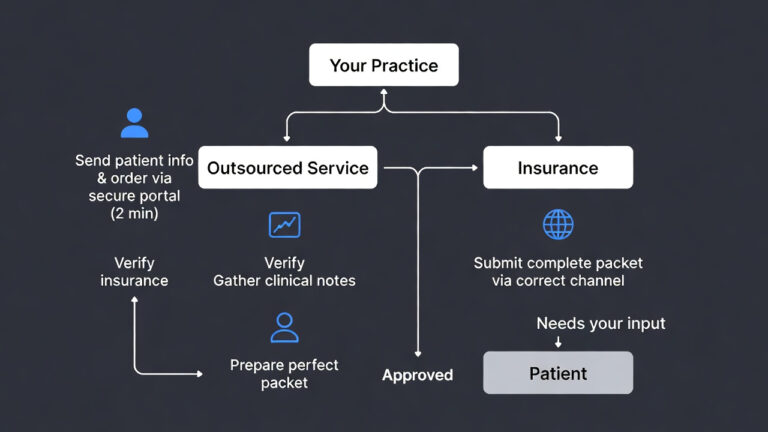
When people search for “medical billing automation,” they are usually looking for a way to stop typing the same data over and over again. In simple terms, automation is software or AI that acts like a digital assistant. It handles the repetitive tasks so your team doesn’t have to. It connects your Electronic Health Record (EHR) to the insurance payers and does the heavy lifting.
Here are the four big things you should automate first:
1. Real-Time Eligibility Verification
This is the “front door” of billing. Before a patient even sees the doctor, the software checks if their insurance is active. It tells you the co-pay, the deductible, and if a referral is needed, instantly.

Why it matters: It stops denials before they happen. You don’t waste time treating patients who aren’t covered.
2. Claim Scrubbing and Claim Edits
Think of this as “spell-check” for your claims. Before you press submit, the automation scans the claim. It checks for missing NPI numbers, wrong diagnosis codes (ICD-10), or incompatible procedure codes (CPT).
- Why it matters: It increases your First-Pass Acceptance Rate. Clean claims get paid. Messy claims get denied.
3. ERA / EOB Auto-Posting
This is the “time saver.” When an insurance company pays you, they send a file (called an ERA or 835). Instead of a human reading a PDF and typing the numbers into patient accounts, the software reads the file and posts the payment automatically.
- Why it matters: It cuts days off your work week. Your staff only has to look at the “exceptions” (the weird cases), not the routine ones.
4. Denial Management
When a claim is denied, automation sorts it out. It reads the reason code (why it was denied), puts it in a work queue, and tells your team exactly what to fix.
- Why it matters: It lowers your Days in Accounts Receivable (A/R). You fix problems faster and resubmit quickly.
Why Clinics in the USA (and California) Need This Now
The healthcare landscape in the United States is getting more complex. Payer rules change constantly. If you rely on manual typing, you will fall behind.
Here is the reality for many practices:
- Human Error: Typos cause a huge percentage of denials.
- Staff Burnout: Your billing team hates data entry. They want to solve problems, not be robots.
- Slow Cash Flow: Manual posting takes time. Automation is instant.
The Local Angle: California
If you are running a practice in Los Angeles, San Diego, San Francisco, San Jose, or Sacramento, you know that labor costs are high. You cannot afford to pay staff to do work that a computer can do for pennies. Automation allows you to scale your practice without hiring five new billers.
The Best Solutions: How to Choose the Right Tool
There isn’t one single “best” software for everyone. It depends on your size, your specialty, and your budget. Here is a simple breakdown of the most highly searched and trusted options.
1. The “All-in-One” Systems (Great for Small Practices)
If you want your scheduling, charting, and billing to be in one place, look at these. They are simple and user-friendly.
- Tebra (formerly Kareo): Very popular for independent practices. It has built-in scrubbing and easy patient statements.
- DrChrono: excellent for iPad users and mobile practices.
- AdvancedMD: Good for growing practices that need strong reporting.
2. The “Clearinghouse” Powerhouses (Great for Established Groups)
If you love your current EHR but hate the billing side, you might need a better clearinghouse to sit on top of it.
- Waystar: This is a top-tier choice. It has excellent claim scrubbing technology and denial analytics. It integrates with almost every EHR.
- Availity: A massive network that connects to almost every payer in the USA. It is great for checking eligibility and claim status.
- Office Ally: A favorite for budget-conscious practices. It gets the job done for a low cost.
3. The “AI and Robotics” (Great for High Volume)
If you are a large multi-specialty group handling thousands of claims, you might need Artificial Intelligence (AI).
- AKASA or UiPath: These tools use “bots” to log into payer portals, check statuses, and fix complex errors that humans usually handle.
A Simple 3-Step Plan to Start Automating
You don’t have to change everything overnight. At Cureintent, we recommend this simple rollout plan.
Step 1: The “Front Desk” Fix (Days 1-30)
Turn on Real-Time Eligibility Verification. Train your front desk to check every patient, every visit.
- Result: You stop getting denials for “Coverage Terminated.”
Step 2: The “Clean Claim” Fix (Days 31-60)
Update your Claim Scrubbing rules. If you keep getting denied for a specific modifier or diagnosis code, add a rule to catch it.
- Result: Your First-Pass Acceptance Rate goes up.
Step 3: The “Back Office” Fix (Days 61-90)
Turn on ERA Auto-Posting. Let the software handle the easy payments.
- Result: Your staff stops drowning in data entry and starts working on old A/R.
Real World Examples: Success Stories from California
The Family Practice in Los Angeles
- Problem: They were overwhelmed by Medi-Cal checks and manual payment posting.
- Solution: They switched to a system with automated eligibility and ERA posting.
- Result: Denials dropped by 25% in two months. The billing manager finally took a vacation.
The Orthopedic Group in San Diego
- Problem: Complex surgeries were getting denied because of coding errors and missing prior authorizations.
- Solution: They implemented specific “Ortho-Edits” in their claim scrubbing software.
- Result: Claims went out clean the first time. Cash flow improved drastically.
The Pediatric Clinic in San Jose
- Problem: Parents were confused about bills, leading to phone calls and slow payments.
- Solution: They automated patient statements and eligibility estimates.
- Result: Parents knew what they owed upfront. Online payments increased.
Conclusion: Less Typing, More Revenue
Data entry automation is not the future; it is the present. If you are still manually verifying eligibility or typing in EOBs, you are leaving money on the table.
By automating the basics, eligibility, scrubbing, and posting—you create a billing process that is clean, fast, and stress-free.
Ready to modernize your medical billing?
At Cureintent, we specialize in helping USA healthcare practices optimize their revenue cycle. Whether you are in Los Angeles, Sacramento, Orange County, or anywhere in the country, we can help you choose and implement the best automation solutions.